Dog health
Six Signs Your Dog Needs a Diet Change
The internet blames the food bowl for everything from itchy ears to a bad mood. The evidence is more selective. Here is what points to diet, what points to the vet, and how to change food without upsetting your dog's stomach.
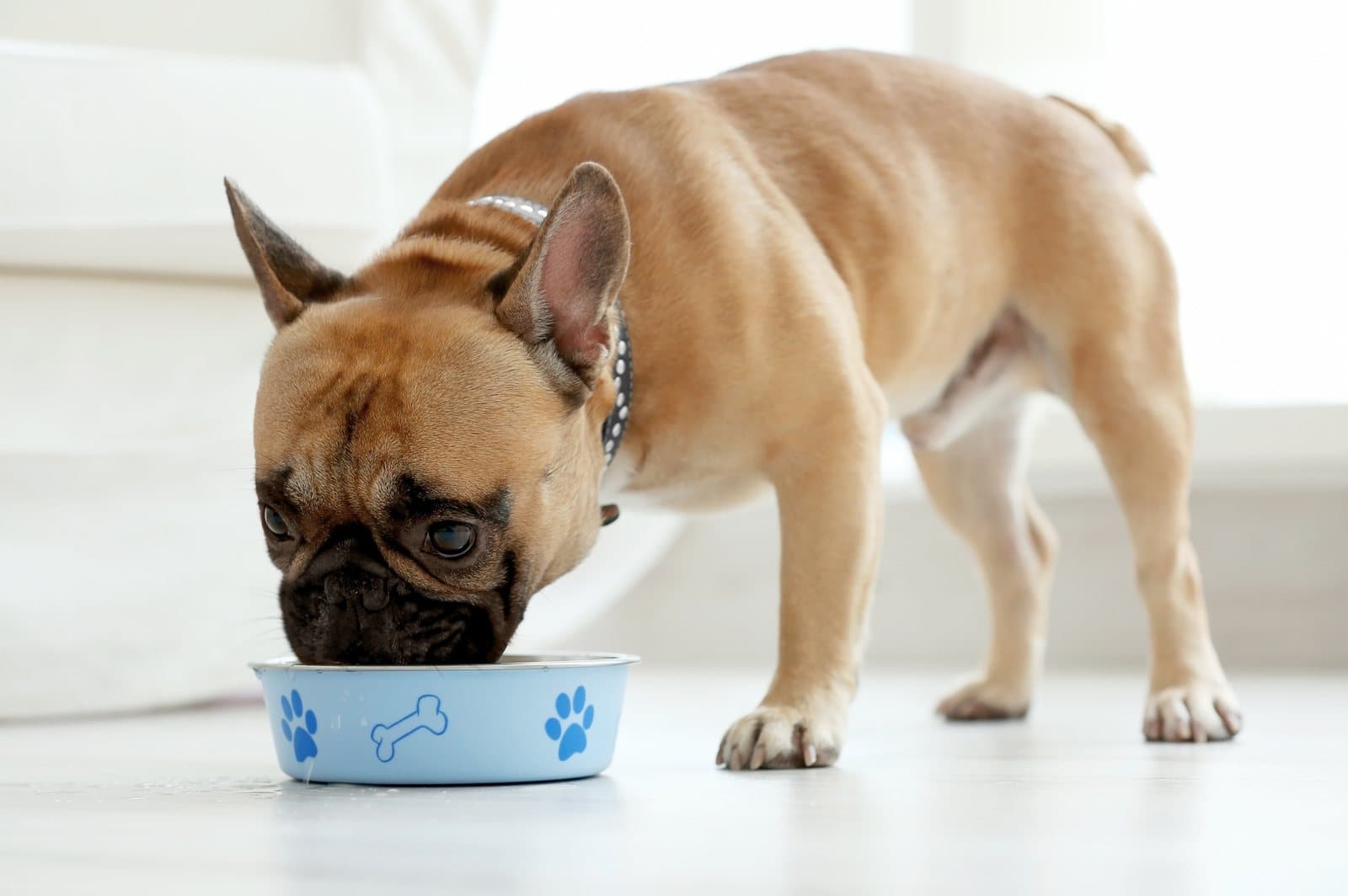
Search for signs that your dog needs a new food and you will find lists of ten, twelve, fifteen symptoms, usually published by someone with a food to sell. Most of those symptoms are real. The conclusion drawn from them often isn't.
Here are six signs worth taking seriously, what the veterinary evidence says about each, and an honest account of how often the answer is a different bag of kibble. Then, because sometimes it is, how to switch without upsetting your dog's stomach.
Itching that never takes a season off
This is the sign most strongly linked to food. According to the Merck Veterinary Manual, the commonest skin sign of food allergy in dogs is itching, typically around the ears, feet and belly, along with ear infections that keep coming back. The giveaway is timing: food-related itching carries on all year, while pollen allergies come and go with the seasons.
When food is the cause, it is rarely the ingredient people expect. A review of the published cases in BMC Veterinary Research counted which foods were actually responsible:
Animal proteins lead the list. Grain is a minority culprit, which makes the popularity of grain-free food as an allergy fix hard to justify. It also carries an open question of its own: since 2018 the US Food and Drug Administration has been investigating reports of a heart condition, dilated cardiomyopathy, in dogs eating diets built around peas, lentils and potatoes. By April 2019 it had received 515 canine reports, and more than 90% of the foods involved were labelled grain-free. The FDA has not established that these diets cause the disease. It is reason enough not to go grain-free on a hunch.
What to do instead
- See your vet before you change anything. Fleas, mites and environmental allergies are all more common than food allergy and need ruling out first.
- If food is suspected, the standard of care is an elimination diet trial run with your vet. The evidence says it should last at least eight weeks, by which point more than 90% of food-allergic dogs have improved.
- Be strict. One chicken treat or a shared crust can undo a trial.
Sources: Merck Veterinary Manual, Cutaneous Food Allergy in Animals; Olivry and Mueller (2017); Mueller, Olivry and Prélaud (2016); Olivry, Mueller and Prélaud (2015); FDA, Investigation into Certain Diets and Canine Dilated Cardiomyopathy
A stomach that's never quite settled
Every dog has the occasional bad day. What counts here is a pattern: soft stools more often than firm ones, a lot of gas, or vomiting that keeps recurring over weeks.
Two different things can be going on. Some dogs simply don't get on with a particular recipe. Veterinary nutritionists at Tufts University point out that a dog may be intolerant of one aspect of a food, such as its fat or fibre level, and do better on a different formulation. Separately, Merck notes that dogs with food allergy can show digestive signs alongside the skin signs, so a dog with both an itchy coat and an unreliable stomach deserves a closer look.
What to do instead
- Keep a two-week diary of stools, vomiting and everything your dog eats, treats and table scraps included. Patterns show up quickly on paper.
- Take the diary to your vet. Parasites and infections cause the same signs and are quick to test for.
- Avoid rotating through several foods in a month. Each abrupt switch can cause the very upset you are trying to fix.
Sources: Tufts University Cummings School of Veterinary Medicine, Petfoodology; Merck Veterinary Manual
The scales are moving
Weight is the diet signal with the biggest consequences and the one owners are slowest to notice, because it creeps.
Vets use a nine-point body condition score promoted by the World Small Animal Veterinary Association. A score of four or five is ideal. In plain terms: you should be able to feel your dog's ribs easily under a thin layer of fat, and see a waist when you look down from above. WSAVA guidelines treat any score outside that range as a nutritional risk factor that warrants a proper review.
Weight gain rarely means the food is wrong. It usually means there is too much of it. Changing brand without changing the quantity achieves very little.
What to do instead
- Weigh meals on a kitchen scale in grams. Scoops and cups are far less accurate than they feel.
- Count treats and chews as part of the daily total, not as extras.
- Ask your vet for a target weight and a feeding amount to match it. A dedicated weight-management food can help, and that is a change worth making with guidance.
- Weight loss you can't explain is different. That needs a vet appointment, not a richer food.
Sources: WSAVA Global Nutrition Guidelines and body condition score charts; WSAVA Nutritional Assessment Guidelines; Salt et al. (2019); Cornell University Riney Canine Health Center
A coat that's lost its shine
Skin and coat are among the first places poor nutrition shows, which is why a look at the coat is part of the routine nutritional screen WSAVA recommends at every vet visit. Dogs need certain fats in their diet because they cannot make them, and a shortfall can leave the coat dry and dull and the skin flaky.
So the useful question is what your dog actually eats. If the answer is a complete food from a reputable manufacturer, a dull coat more often points to parasites, allergy, a hormonal problem or simply a need for grooming. If the answer is home cooking, a food sold as "complementary", or a diet that is mostly treats and leftovers, nutrition moves up the list.
What to do instead
- Read the label. In the UK and EU, "complete" means the food is designed to be the whole diet. "Complementary" means it is not.
- If you cook for your dog, have the recipe checked by a vet with nutrition training. Well-meant home diets are the commonest route to a real deficiency.
- Mention coat changes at your next check-up instead of adding supplements on guesswork.
Sources: WSAVA Global Nutrition Guidelines; Merck Veterinary Manual, Nutritional Requirements of Small Animals
A birthday has changed the brief
Sometimes nothing is wrong with the food. The dog has just outgrown it.
Nutrient standards for dog food are set by life stage. The Merck Veterinary Manual describes two main categories: growth and reproduction, and adult maintenance. A puppy needs a growth diet. An adult dog kept on puppy food is getting a formulation built for a job their body has finished doing. Merck also notes that although the official profiles treat adulthood as one stage, the research shows needs continue to shift as dogs move through maturity into old age.
This matters more for adopters than for most owners. Shelter dogs often arrive with an estimated age and an unknown feeding history, so the food that came home with them may have been chosen for convenience and not for their stage of life.
What to do instead
- Check the life stage printed on the bag against your dog's actual age.
- Ask your vet when to move from puppy to adult food. The right moment depends on expected adult size, and large breeds mature later.
- Revisit the question as your dog approaches their senior years. Your vet can tell you when that is for their size and breed.
Source: Merck Veterinary Manual, Nutritional Requirements of Small Animals
The bowl is still full
This is the sign most often blamed on food and least often caused by it.
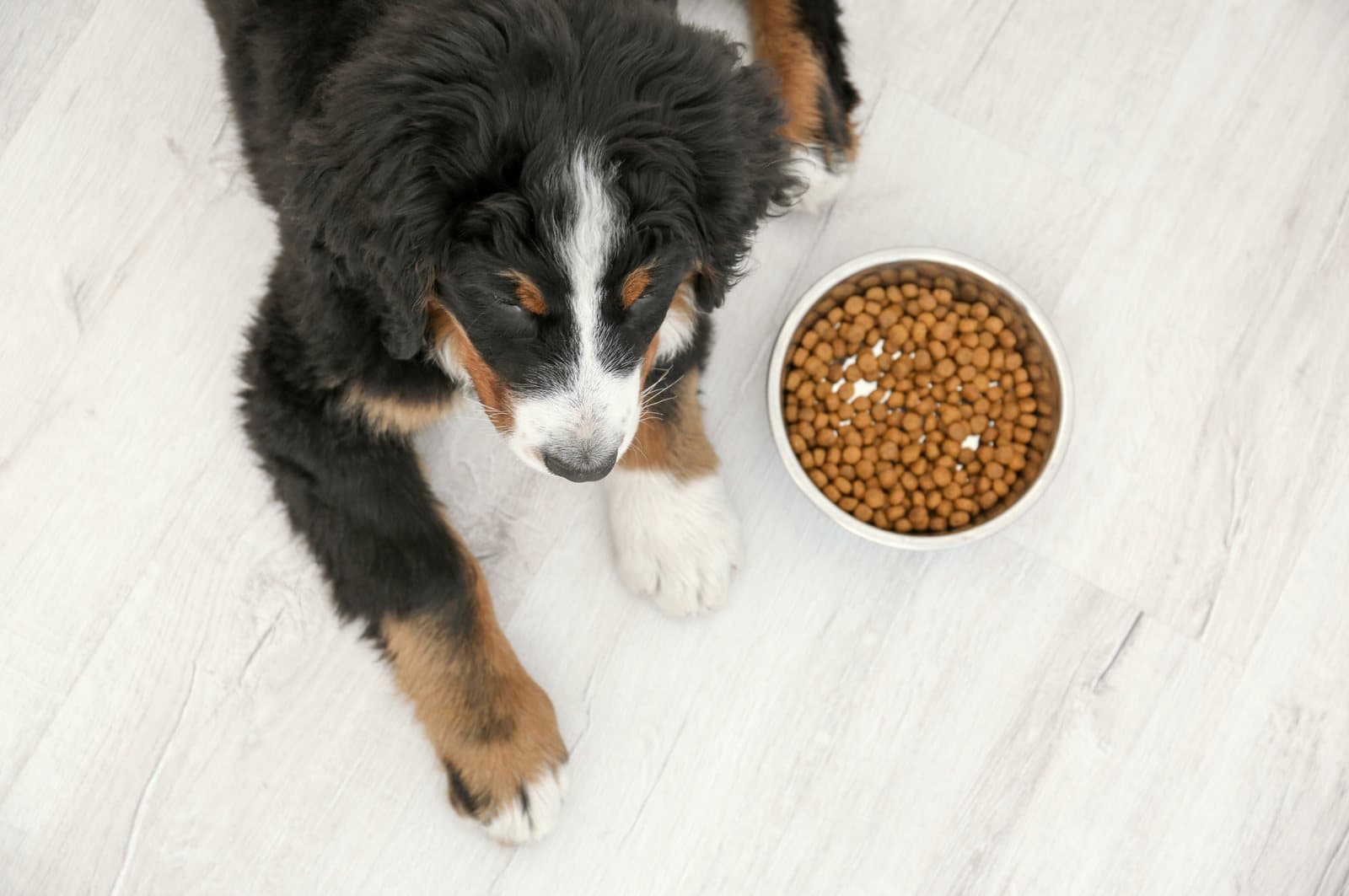
A dog who walks away from kibble but brightens up for roast chicken is telling you about preferences. That is not a nutritional problem, and adding toppers every time they hesitate teaches them that hesitating works. A dog who was eating well and then stops is telling you something else entirely.
What to do instead
- If a previously keen eater goes off their food, or stops eating altogether, speak to your vet promptly. Dental pain, nausea and illness all look like fussiness.
- For a healthy dog who is merely choosy, offer meals at set times, lift the bowl after a short while, and cut back on treats between meals.
- Give a newly adopted dog some grace. Appetite often dips for the first few days in a new home.
How to switch food properly
If you and your vet agree a change is right, go slowly. The nutrition service at Tufts University's veterinary school recommends mixing a growing share of the new food into the old over at least a week, so the digestive tract has time to adjust.
| Days | Current food | New food |
|---|---|---|
| 1 and 2 | 75% | 25% |
| 3 and 4 | 50% | 50% |
| 5 and 6 | 25% | 75% |
| 7 onwards | 0% | 100% |
Two details make this work. First, measure by calories and not by volume, because a cup of one food can hold far more energy than a cup of another. Second, let your dog set the pace. If stools loosen at the halfway mark and your dog is otherwise fine, Tufts advises going back to the last ratio that caused no trouble, holding it for a day or two, then carrying on. Ongoing vomiting, watery diarrhoea, pain or lethargy means stop and ring the vet.
The first weeks bring plenty of other decisions too. 5 Mistakes First-Time Dog Adopters Make covers the ones that catch people out, and Five Foods You Should Never Give to Your Dog covers what must stay off the menu whatever you feed.
Source: Tufts University Cummings School of Veterinary Medicine, "How do I switch my pet's food?"