Adopter advice
5 Mistakes First-Time Dog Adopters Make
(And How to Avoid Them)
First-time adopters tend to make the same handful of mistakes. Not from carelessness, but because nobody told them what the first few months of dog ownership actually looks like. This article does that.
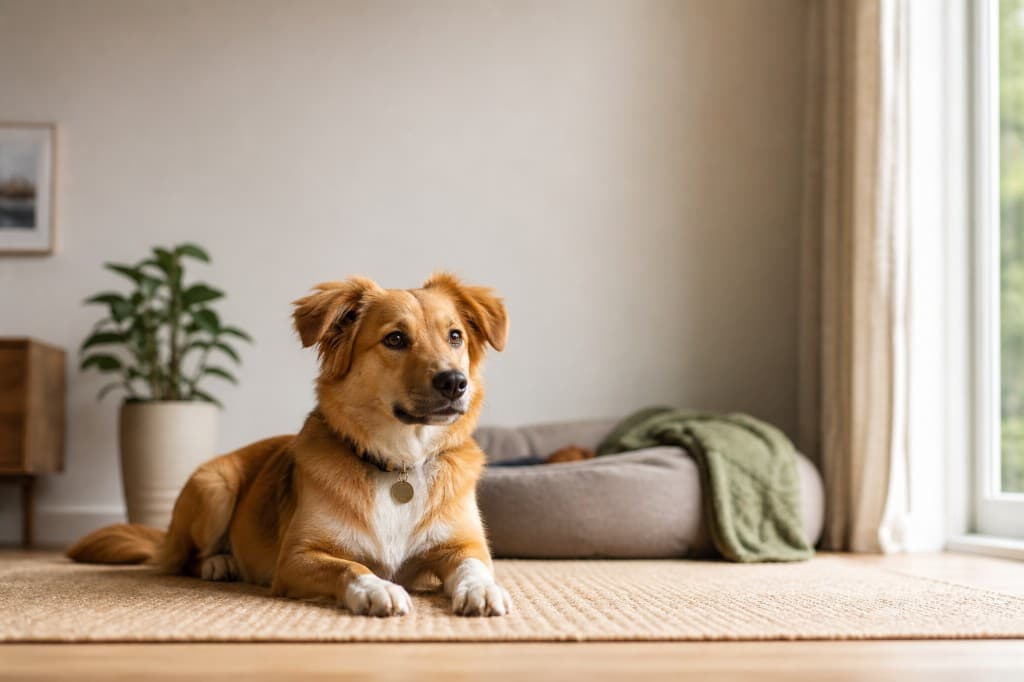
Adoption is a good thing to do. It is also something most people get at least partly wrong in the first few months. Not because they are bad owners, but because the gap between how rescue is portrayed and how it actually unfolds day-to-day is wider than most people expect. These are the five mistakes that come up again and again.
Expecting your dog to "be themselves" from day one
Most people expect adoption to feel like the end of a film. The dog arrives, bounds around happily, and the family is complete. What actually happens is often much quieter. Sometimes much harder.
Rescue organisations use the 3-3-3 ruleto help adopters understand what is normal. The first 3 days are pure decompression: the dog is processing the kennel environment, the car journey, the new smells, the new people. The next 3 weeks are about learning the household's rhythms. The full 3 months is when most dogs start to feel genuinely at home.
The 3-3-3 rule is a guideline, not a contract. Every dog is an individual. Dogs with trauma histories, or those who have been rehomed multiple times, often need significantly more time than the rule suggests.
What to do instead
- Give your dog a quiet space to decompress in for the first few days; don't fill their world with noise and activity
- Resist the urge to bond intensively in week one. Calm, consistent presence is more valuable than forced affection
- Assume the dog you see in month one is not the dog you'll have in month six
Sources: PMC – Qualitative exploration of adopter experiences (2025); WeRescue – The 3-3-3 Rule for Rescue Dogs
Throwing a welcome party in week one
You're excited. Naturally, you want everyone to meet the new dog. Your parents want to visit. Your friends are asking for photos. You think: it's fine, the more love the better.
A newly adopted dog is already overloaded. They're processing a completely new environment, new smells, new routines, new people. Layering visitors on top of that is overwhelming, even when those visitors are calm and gentle and mean well. The RSPCA advises avoiding all visitors for the first one to two weeks, and then introducing people in small groups.
The same logic applies to outings. The temptation to take your dog everywhere immediately is understandable. But an overstimulated dog can't bond, learn, or relax. Let them find their footing at home first.
What to do instead
- Hold off all social visits for the first 1–2 weeks
- When visitors do arrive, ask them to wait for the dog to approach in their own time; don't push them to interact
- Prioritise local, familiar walks rather than exciting new environments in the early weeks
Sources: RSPCA – Support for adopters
Skipping pet insurance, or getting it too late
A dog that has just been through a full shelter health check feels like a safe bet. Insurance can wait, you think. It often can't. And the timing matters more than people realise.
Many rescue organisations include a short period of temporary cover as part of the adoption package. It's a helpful starting point. But it's not a substitute for a proper lifetime policy, and it tends to run out before you've had time to do the comparison shopping you need to do. Look for lifetime cover rather than a 12-month-and-out policy, a high per-condition limit (some treatments run into the thousands), and read the breed-specific exclusions carefully.
The adoption fee covers a lot, but it is just the beginning. Food, vaccinations, flea and worm treatment, grooming, insurance, routine vet visits, and emergency bills all come after. UK rescue organisations are consistent in their advice on this: research the full ongoing costs before you commit, not after.
What to do instead
- Use any temporary cover your rescue provides, but buy a permanent lifetime policy within the first two weeks
- Prioritise coverage per condition over the cheapest monthly premium
- Get insurance in place before your first independent vet visit
Sources: RSPCA – How to Adopt a Dog; ASPCA – Dog care
Misreading shutdown behaviour as a calm personality
Some dogs arrive and appear to be perfectly behaved. They're quiet, they don't jump on the furniture, they follow you around calmly. New adopters often think: we got lucky, this dog is easy. Then six weeks in, the furniture gets destroyed.
This pattern, known as shutdown behaviour, is a stress response. A dog overwhelmed by their new environment will often suppress their personality completely. They are not calm. They are frozen. As they begin to feel safer, that personality starts to emerge, and with it come the behaviours they were too stressed to show initially.
The reverse is equally true. A dog who arrives anxious, reactive, or destructive in week one may simply be in crisis from the transition. Those behaviours often improve significantly once the dog feels genuinely safe. Sometimes without any formal training at all.
Most behaviourists recommend giving the dog space rather than testing their limits early, and making no assumptions about their personality until they have been in the home for at least three months.
What to do instead
- Don't test limits or boundaries in the first few weeks. Taking toys, interrupting rest, or introducing other animals suddenly can all be destabilising
- Treat any new behaviour that emerges over time as information, not regression
- If concerning behaviours appear after the honeymoon period, consult a certified behaviourist — not the internet
Sources: WeRescue – 3-3-3 rule (Ohio State research cited); RSPCA – Adopter support
Leaving them alone before they're ready
Life doesn't stop when you adopt a dog. Most people need to return to work or normal routines fairly quickly. That's understandable. The problem comes when dogs are left alone for long periods before they've had any time to learn that being alone is safe.
A common early mistake is assuming a dog will simply get used to it when left alone for long stretches. They won't — at least not without gradual conditioning. Exposure to separation without preparation makes anxiety worse, not better. This is one of the leading reasons rescue dogs are returned within the first six months.
One more thing worth knowing: keep arrivals and departures low-key. Enthusiastic reunions feel loving, but they signal that your absence is a big event. Matter-of-fact comings and goings communicate that separation is normal. A quiet "hey" when you walk in beats a dramatic reunion every time.
What to do instead
- Start with very short absences (a few minutes) and build gradually — jumping from home all day to eight hours out overnight is too much
- Use a dog walker, pet sitter, or day care in the first few weeks if you need to be out for long periods
- Keep greetings and departures calm and low-key
- If your dog is showing signs of distress when alone, contact a certified trainer before the behaviour becomes entrenched
Sources: ASPCA – Separation Anxiety in Dogs; A Canine Affinity – Introducing alone time