Dog behaviour
Why Do Dogs Kick the Ground After They Poop?
It looks like tidying up. It is closer to signing their work. What decades of field research and thousands of shelter dog walks say about one of the oddest things dogs do.
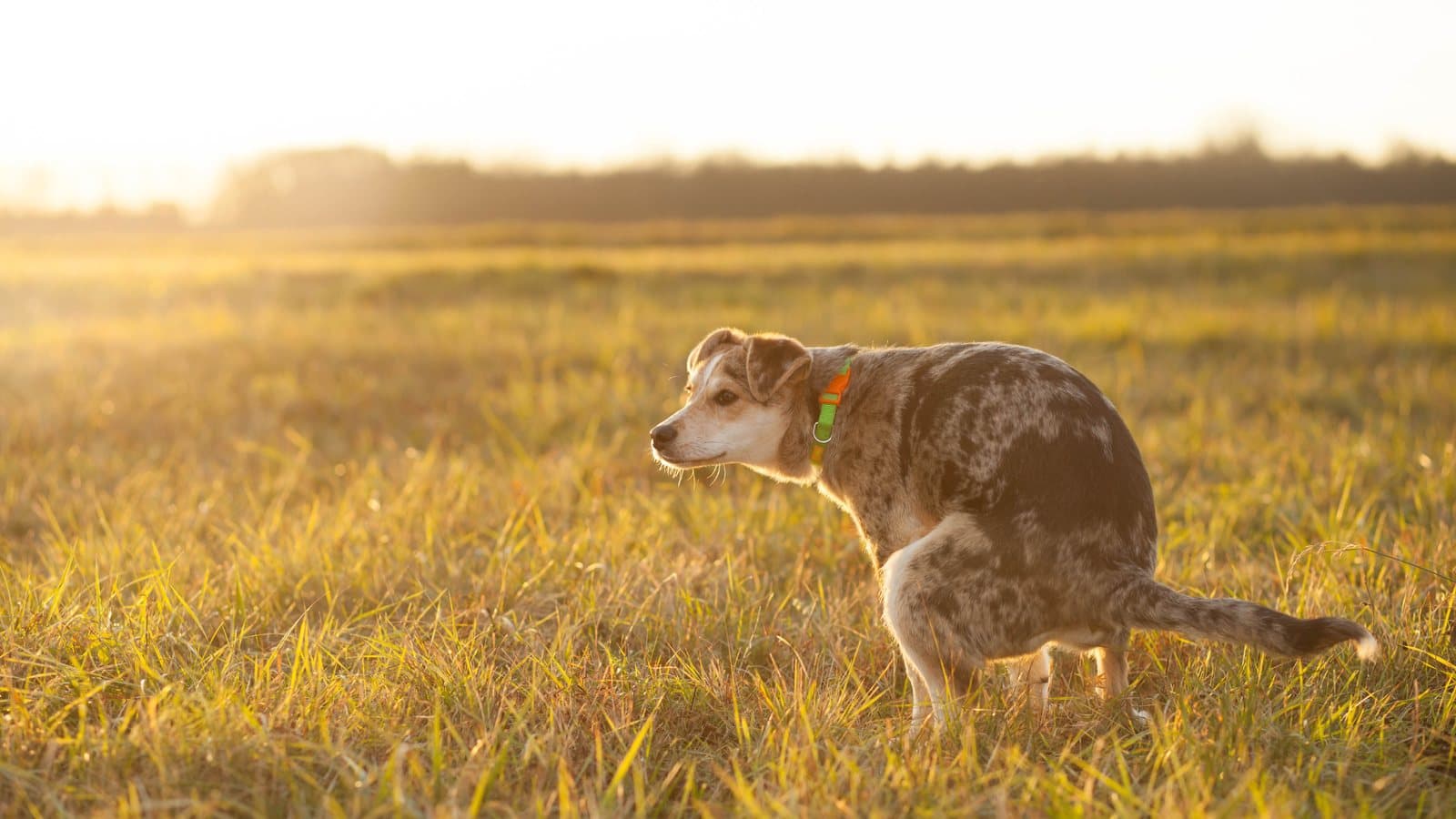
Cats bury it. Dogs do the opposite. They finish, take a step forward, and fling grass and soil backwards with all the ceremony of someone signing a contract.
The behaviour has a name, ground scratching, and behavioural scientists have been watching it since the 1970s. Some of the best data we have comes from shelter dogs out on their daily walks, which makes it a surprisingly useful thing for an adopter to understand.
It's a signal, not a clean-up
The obvious guess is that your dog is trying to cover up the evidence. Watch where the debris lands, though. It sprays out behind them and mostly misses. Nothing gets buried.
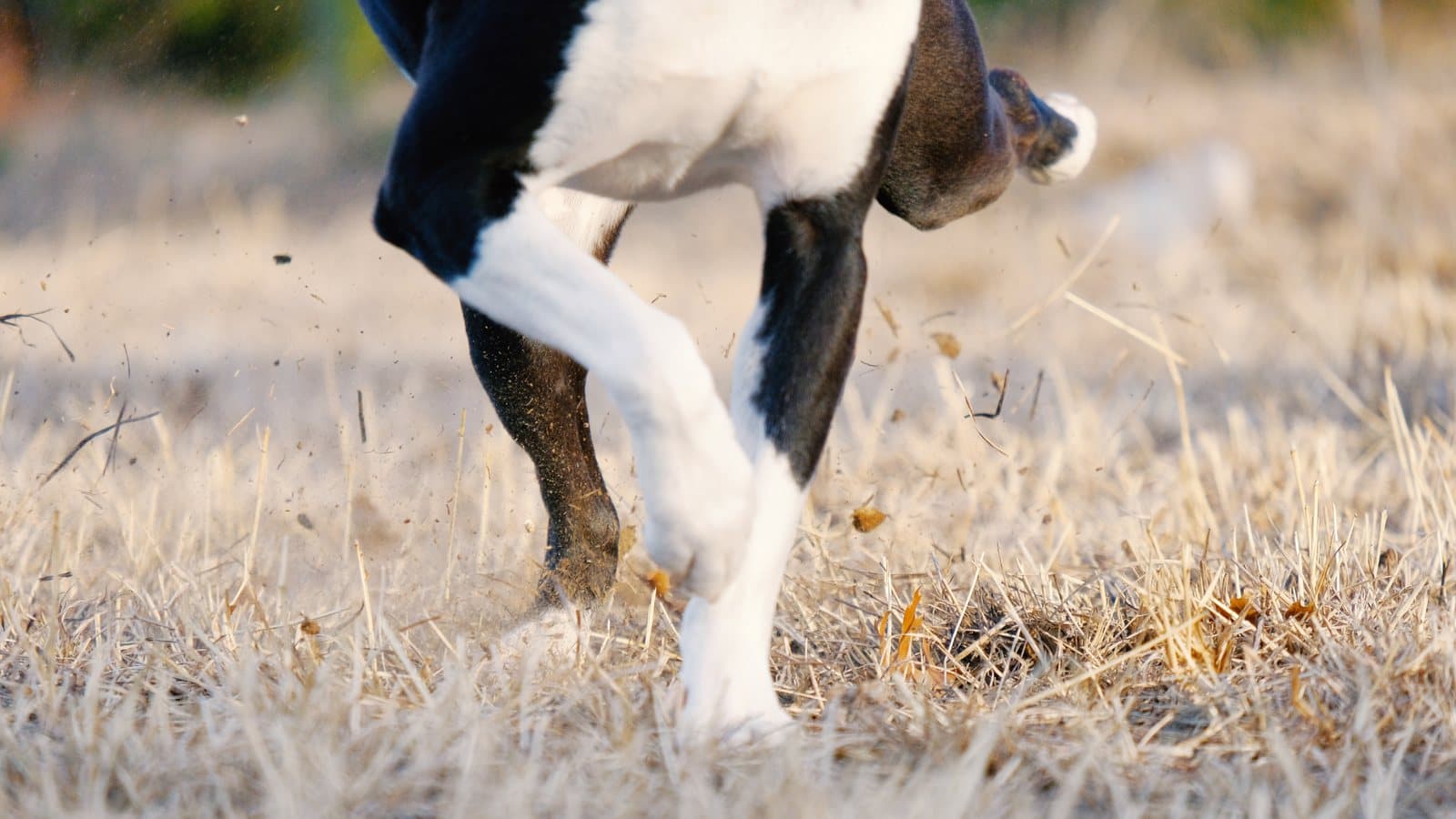
In the research literature, ground scratching is defined as backward scraping of the ground with the hind feet, the front feet, or both, performed by some dogs straight after they urinate or defecate. Wild relatives such as wolves and coyotes do it too, so this is old canid behaviour, not a quirk of the modern pet.
Not every dog does it, and the ones who do don't do it every time. That inconsistency is itself a clue. If this were about hygiene, you'd expect it to be routine.
Sources: McGuire et al., Animals (2020); Cafazzo, Natoli and Valsecchi, Ethology (2012)
The mark you can see
In 1979 the ethologist Marc Bekoff published a short paper in the Journal of Mammalogy that still frames how scientists think about this. He described ground scratching as a composite signal: one behaviour carrying information through more than one channel.
The first channel is visual. The scratches themselves are a mark, slashes in the turf that stay put after the dog has gone and point other dogs towards the deposit. The second visual element is the performance. A dog scraping the ground is hard to miss from across a park.
So if your dog saves their most theatrical kicks for the busiest corner of the park, you aren't imagining it. An audience appears to matter.
Source: Bekoff, "Ground Scratching by Male Domestic Dogs: A Composite Signal", Journal of Mammalogy (1979)
The scent you can't
Here is the claim you'll see repeated everywhere: dogs have scent glands in their paws, and kicking releases pheromones. It is partly right, and worth stating carefully.
Dogs do have eccrine sweat glands in their footpads. A 2017 study in Scientific Reports on how carnivores communicate through their feet notes that the footpad secretions of dogs, cats and wolves are rich in compounds thought to matter for territorial scent marking. Scraping the ground would smear those secretions into the soil. It would also spread the smell of the urine or faeces over a wider area.
Which dogs do it, and which don't
A research group at Cornell University has spent more than a decade walking shelter dogs and recording exactly what they do. In one study, 100 adult dogs were each taken on 20-minute lead walks while every urination, defecation and ground scratch was logged.
Three more findings from the same research programme are worth knowing:
- Neutering makes no difference. Castration lowered how often male dogs urine-marked, but spaying and neutering did not change the likelihood of ground scratching in either sex.
- Females do it too. In the 100-dog study, sex was not a significant predictor of whether a dog scratched.
- Young dogs do less of it. Juvenile shelter dogs urinated, defecated and ground scratched less often on walks than mature dogs.
There is also a hint about personality. In a pack of free-ranging dogs studied in Italy, high-ranking animals ground scratched more often than low-ranking ones. The Cornell team's reading of that result: perhaps the dogs who scratch are simply the more confident ones.
Sources: McGuire et al. (2020); McGuire, Applied Animal Behaviour Science (2016); McGuire, Journal of Veterinary Behavior (2019); Cafazzo et al. (2012)
What it tells you about a rescue dog
Scent marking is sensitive to how a dog feels. That is the part adopters should pay attention to.
Adult male dogs normally lift a leg for almost every pee. In the shelter the Cornell team studied, they did so for only 73% of urinations, compared with 94 to 97% recorded for dogs living elsewhere. Fearful adult males are known to slip back into the four-feet-on-the-ground posture they used as puppies. The same male dogs urinated at about half the rate when an unfamiliar man held the lead as they did with an unfamiliar woman.
It fits a pattern you'll see across rescue behaviour: the dog you meet in week one is often a quieter edition of the dog you'll have in month three. We cover that in more detail in 5 Mistakes First-Time Dog Adopters Make.
Sources: McGuire et al. (2020)
When to step in
Almost never. Ground scratching is normal communication, and there is nothing to correct. Telling a dog off for it is like telling someone off for waving.
There are a few practical exceptions. Lawns suffer. Bystanders get showered. Dogs who scratch hard on tarmac or gravel can scuff their pads or catch a nail.
What to do
- If you want to protect a particular patch of grass, walk on calmly the moment your dog finishes and reward them for coming with you. Redirect; don't punish.
- Check paws and nails now and then if your dog is an enthusiastic scratcher on rough surfaces.
- Know what it isn't. Dragging the rear end along the ground, or constant licking and chewing of the paws, are different behaviours and both are worth mentioning to your vet.